
Friends,
No issue this week — but we’re already deep into next week’s.
Tonight, Leonard Robinson will be participating in a quintessential Clubland ritual: bringing prospective club members to a “Prospective Member’s Night”. Picture a fantastic evening in a (usually) wood-paneled room with stiff cocktails and passed hors d'oeuvres chatting about the club’s stained glass windows, architecture terms that you’ve heard on your walk over and hinting around hoping that someone just says the true cost of membership.
But Leonard won’t be joining a new club, but rather, introducing new members to his storied Manhattan club.
Next week’s issue will include his reflections on his (first) proposal process and Ishaan Jajodia will present a new Clubhouse Guide on picking the best candidate to propose for club membership.
Please enjoy these past selections from our archives. See you next week!
The Art of the Club
Being clubbable has always been an art, and never a science. Like all arts, there are rules, norms that govern it, and if you follow them too stringently all you get is ossification.
There is, however, a lot more to the art of the club than being clubbable. For once, clubs have long played host to art collections of note.
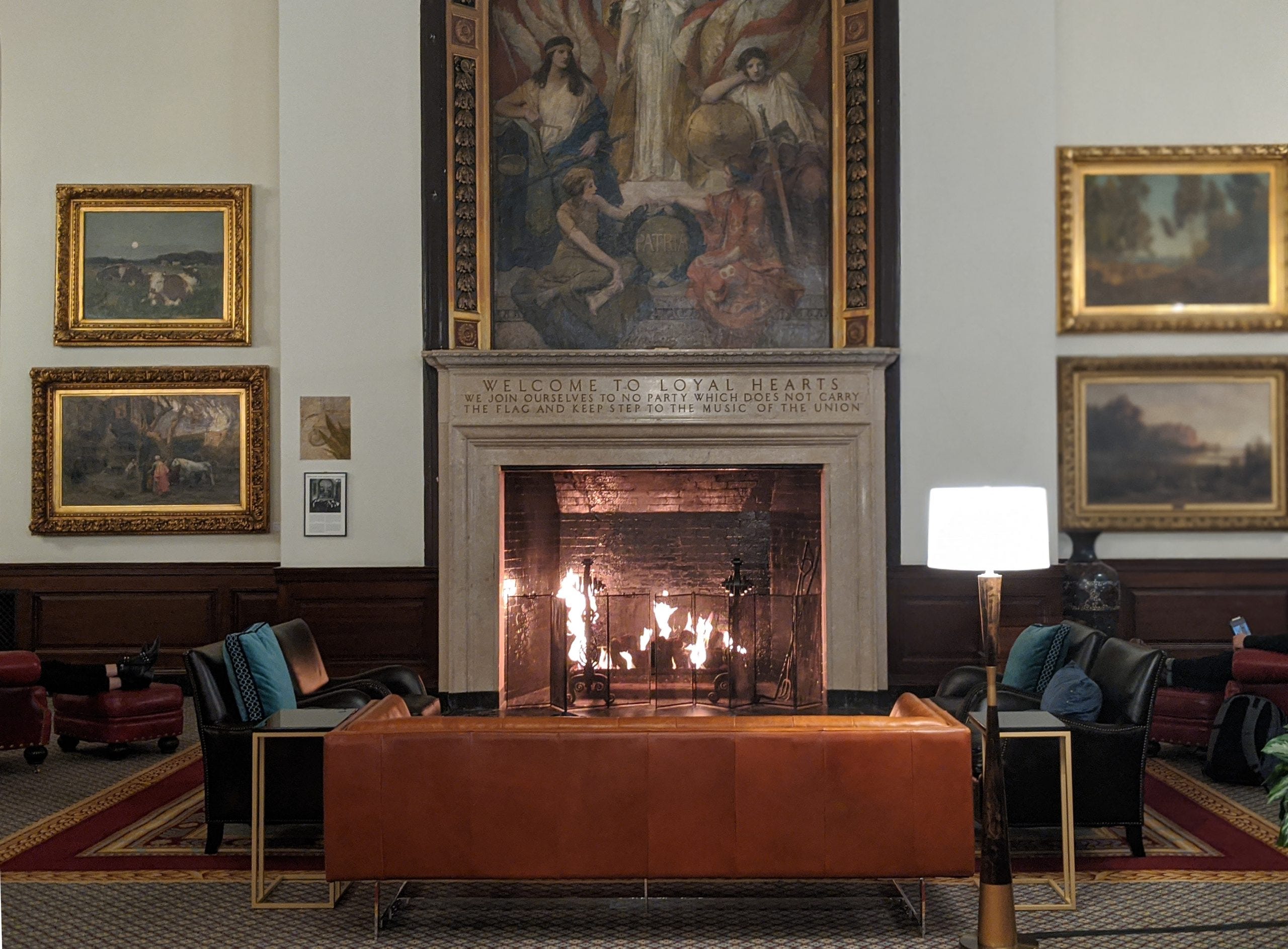
To read more of Ishaan’s deep dive into art and Clubland, please click here.
Ushering a New Golden Age of Fraternalism
Q&A with Viridian Club’s Alex Pacheco
by Leonard Robinson
Clubland USA: When you speak of the Golden Age of Fraternalism and Viridian being a part of a sort of new age of this, what do you mean?
Pacheco: Across the country, we have a major trust and national identity problem that’s not unseen before in American history. We had a similar effect after the Civil War and it was still worse than what we had today which inspired me to look to historical precedent.
From about 1870 to 1920, in a period known as the Golden Age of Fraternalism, our country rebuilt trust and a national identity despite having extremely high levels of foreign-born percentage of the population. At its peak during this period, 40% of adult males in the United States were members of at least one private fraternal societies.
It was during this period when most of the nation’s oldest clubs, such as the Union Club in New York and the Bohemian Club in San Francisco, were founded. This is where we got collegiate fraternities and sororities as well.
We’ve all seemed to have forgotten the reason that we have these institutions. People don’t make clubs just to say, “Here’s a circle, there’s exclusivity, we’re in, you’re out.” It’s not about that.
Viridian Club wants to bring that about the same spirit that led to the founding of many of these older clubs to our current generation.
To read more of this Q&A, please click here.