
“We want to usher in the New Golden Age of Fraternalism and create a space for men to socialize with men and become the best versions of themselves.”
That’s Alexander Pacheco describing his grand vision for the Viridian Club, a new social club set to open its clubhouse this summer in downtown Austin. The club, which has exclusively male membership while allowing female guests, currently has over 20 members who meet monthly and a waiting list of roughly 180.
During our first conversation, which spanned nearly two hours, Pacheco explained his vision for a new ecosystem of social clubs that were anchored by a shared appreciation of values — rather than hobbies and geography. It still remains as one of the most fascinating conversations that I’ve had since launching Clubland USA.
A former tech founder, Pacheco combines a disruptive spirit with a deep appreciation for history, moving fluidly between conversations about cryptocurrency, insights from Cicero and why traditionalism is the new counterculture.
His initial interest in the world of clubs was birthed from an interest in systems engineering and network science, particularly the work of Stanford’s Matthew O. Jackson who published The Human Network in 2019.
That same year, Pacheco launched 150, a social network startup built on Dunbar’s Number, which states that the brain has a limit of 150 meaningful relationships. The startup struggled to gain users, but Pacheco says that the research gained in the process has been an immense help in his latest venture.
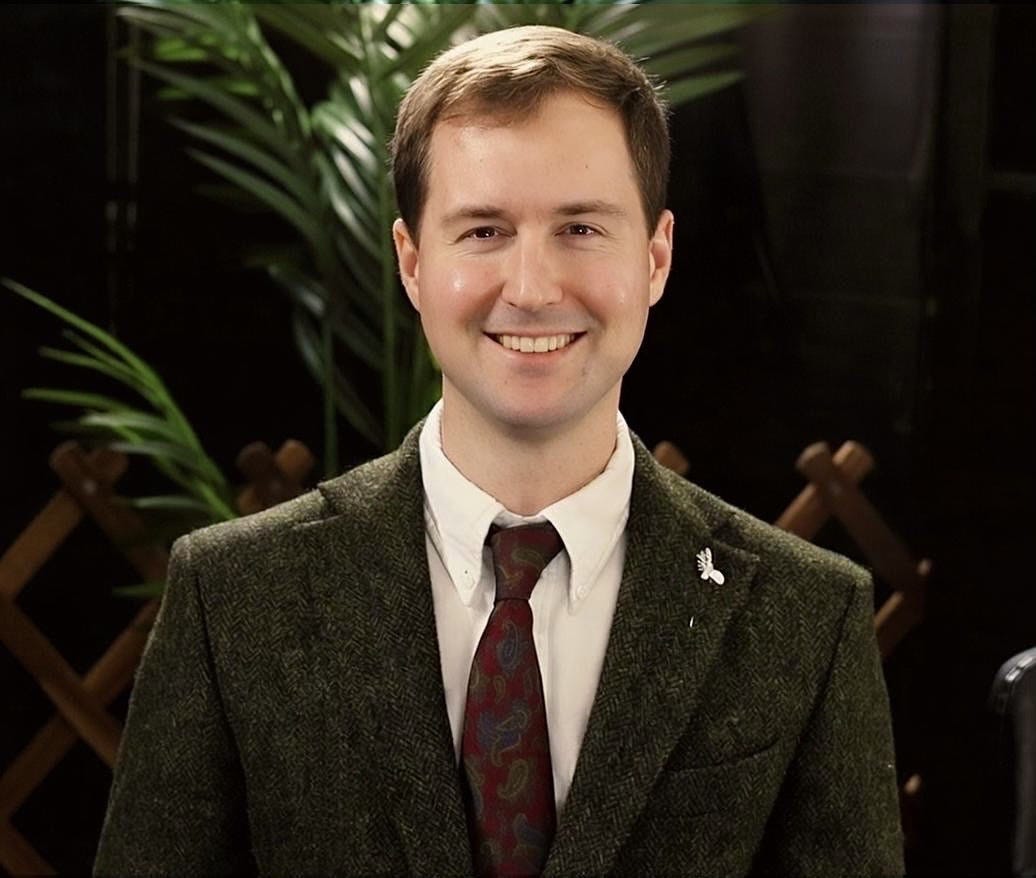
A native of upstate New York, Pacheco relocated to Texas a decade ago spending seven years in Dallas before moving to Austin in 2022. He tells Clubland USA that Austin is ripe for a social club that fits the growing scene of heterodox writers, intellectuals, and comedians who have begun calling the city home after the Covid-19 pandemic — and that Viridian Club can fill the gap.
The Q&A has been edited and condensed for clarity.
Clubland USA: When you speak of the Golden Age of Fraternalism and Viridian being a part of a sort of new age of this, what do you mean?
Pacheco: Across the country, we have a major trust and national identity problem that’s not unseen before in American history. We had a similar effect after the Civil War and it was still worse than what we had today which inspired me to look to historical precedent.
From about 1870 to 1920, in a period known as the Golden Age of Fraternalism, our country rebuilt trust and a national identity despite having extremely high levels of foreign-born percentage of the population. At its peak during this period, 40% of adult males in the United States were members of at least one private fraternal societies.
It was during this period when most of the nation’s oldest clubs, such as the Union Club in New York and the Bohemian Club in San Francisco, were founded. This is where we got collegiate fraternities and sororities as well.
We’ve all seemed to have forgotten the reason that we have these institutions. People don’t make clubs just to say, “Here’s a circle, there’s exclusivity, we’re in, you’re out.” It’s not about that.
Viridian Club wants to bring that about the same spirit that led to the founding of many of these older clubs to our current generation.
Clubland USA: What’s that going to look like?
Pacheco: A mutual worldview is the number one predictor of long-term friendships or as the saying goes, birds of a feather flock together. You’re aiming for spaces where people can comfortably meet and build relationships with people who share their worldviews.
You really have to balance two competing realities here: you need a big tent approach but also to remember that your club is not going to be able to welcome everyone and that’s okay. These are both important because people shape the place which shapes people. I tell folks that if there’s a spectrum from social club to fraternity, we’re definitely on the side of social club but closer to fraternal society than any other club in town.
To top it off, we’re a more conservative club and acknowledge that the right and the left build social networks differently. The right tends to centralize. A point in case was in the ‘80s and ‘90s, Fox News worked so well because it mimicked the innate social network topography of the right, which is centralization. In major cities today, people who are more conservative are searching for their centralized point that their brains are searching for that can’t be tapped in places that it used to, such as churches.
We also live our values as well. The Club, for instance, says to prospective members that within five years of joining, we expect for you to be married and ideally own property. We see these as goals for setting up good quality men. Manhood for us is about empowerment, leveling up and saying, “Hey, you’re actually not good enough where you are, but we believe you can be better, and here’s our standard. Reach it.”
Our universities used to be this. They used to not just be places of education, but finishing schools for young men and women. They created a certain type of person. A Harvard man used to mean something. A Yale man was something different. We are trying to create or make Viridians, much like collegiate fraternities have a program—”Here’s how we’re going to make you as a man.” We’re doing something similar.
Clubland USA: In 2025, what’s the motivation around building a club that only allows men for membership?
Pacheco: This isn’t a surprising question. People are like, “You’re doing a men-only club in today’s climate?” I think because I have so many friends that are on the edge of the Overton window, to us it’s very clear that the world’s moving this way.
We are for men and women with traditional values, and those, even the women with traditional values, prefer the men to lead in their relationship. When nearly half of men between the ages of 18 to 30 have not approached a woman in person, they need all the help they can get.
So how do we do this? We put men in a position in a very comfortable place amongst all their friends, a place that they’re familiar with, that they like, and it’s nice and well-designed. They get to go out to a woman in a position of high status and say, “I would love to invite you to join me to the club for an evening. It would make me very happy if I could be your escort for the evening.”
Traditional women love this. Again, we’re not for everybody. We’re for traditional men and traditional women. They want something like this. There’s nothing in society that offers it to them. We’re not offering this to everyone. We realize that a lot of other women and even men are like, “Yeah, no, we threw out the traditional roles.” We’re not like that. And if we truly believe in a liberal democracy, then allow us to be as society allows you to be.
We are making good quality men to be good husbands, to be good fathers. Well, we can’t do that in a space that is mixed gender. I can’t speak directly to men about how to be good men and speak to them in a way where you can speak more sternly to a man without it hurrying into an emotional thing or ego thing.
And usually, I also remind them that we’re within walking distance to the Austin Women’s Club and I’ve not heard any protests there.
Clubland USA: Clubs are often deemed to be elitist. You’re building a club full of conservative men aiming to be leaders, strong husbands, fathers. Are you building an elitist institution?
Pacheco: We’re elitists. The last thing about hippie-ism is that we’ve gotten rid of elitism. They’re like, “Everyone’s equal. It’s egalitarianism. If we just give you the same amount of nurturing, education, everyone can be just like you. There’s nothing special.”
A great book—it’s required reading for our members—is Leaving a Legacy by Johan Kurtz. He recently wrote an article on his Substack titled, “Raising children worthy of empires” — and that is very close to our values and how we see the world.
There is a value of keeping in a family business or a family line or a fraternal society where they bring you in and you can learn—like a master-apprentice program produces very different offspring than the university system.
Our members really connect with the analogy: it’s like an officer class in the military versus infantrymen. You can’t give the officers and the infantry the same instructions. If they did, the enemy army would just be like, “Okay, don’t play the game and you’ll win.”
That’s where we’re at. We’re trying to teach every single person—we’re suffering with overproduction of elites, simultaneously with elite underproduction. Everyone’s getting a degree and you’re a project manager at Meta—”Cool, you’re an elite. You’re in tier-one class, baby.” Some midwit IQs are lower—the average IQ in universities is 15 points past. But simultaneously, we’re not producing any quality elites.
Elites have always operated at a higher level of complexity, a higher level of consciousness of the world. The average person just wants to know what’s for dinner tonight and Johnny’s soccer game, and the masses need that. You can’t give them the duty and responsibility that you equally give to elites. They are raised and made completely differently.
Our members are striving in their 20s, 30s, and 40s to be future leaders in society. We know that the only way to be a high-quality leader—one that has a duty to serve the lower class as well—is to build themselves in a very unusual way, especially compared to the systems that are available.
Clubland USA: What are the ages of your membership?
Pacheco: This definitely is a young person’s space. It’s Gen Z millennials. 20s to 40s is what we’re all going to be targeting. Nearly two-thirds of our membership is below the age of 45 and we plan to keep it that way. You have to target young people. You have to build basically a private setting for the social scene to occur. You want to find your niche to describe who can’t come in without using negative adjectives. Ideally, the person leading it is modeling that lifestyle. People should want to be like them in that way.
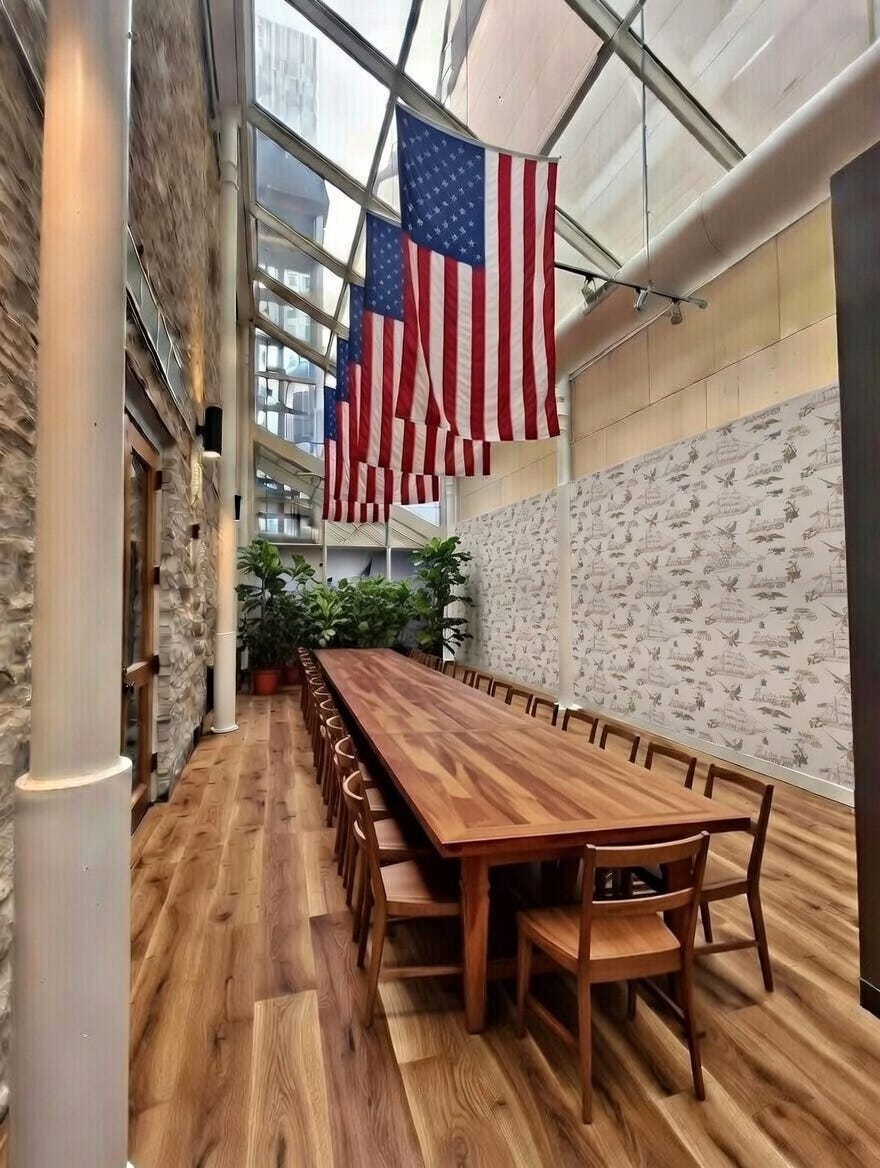
Clubland USA: You’re in the final process of securing a space in downtown Austin. Tell us about the importance of a physical space.
Pacheco: People really bond to a space. I talked to a frat dad—one of those live-in resident advisors who’s been here in Austin for 10 years. He’s like, “You have to have these men bond not just only with each other, but with the organization itself, and if the organization is going to be an institution, it needs to have institutional things.”
Having a location or a place is a big part of that.
You can anchor your Club to a bar or restaurant, but their model won’t reward regulars in the same way that a private space does. The idea of a regular is not useful to them anymore, not profitable. So where do those people go? The regular type of people will seek more and more private institutions, private places. That’s what’s important about having a clubhouse.
Clubland USA: You’re a private owner of a club compared to a nonprofit or a membership collective of sorts. What advantages do you see to this and also any advice for others wanting to follow in your footsteps?
Pacheco: Private clubs have grown 66% in the past year in the United States and are projected to continue growing 11.2% year over year. I think this is going to grow so big that it’s a competing asset class especially considering that it’s a $27 billion industry today with potential to reach up to $270 billion. That’s a large enough industry so that investors within it can diversify.
I find it to be actually a really good business model. (Yes, Clubland USA raised eyebrows here too!)
Private clubs are generally valued by like 2-3X of their yearly revenue, like a sales multiple. A lot of them are incentivized to add all these high revenue services, which aren’t so high profit margins. Our plan is to do just drinks like cocktails, beer, and wine with light appetizers. At scale, we have over 70% profit margin.
This gives us an opportunity to revitalize a bunch of really niche use cases, beautiful buildings and repurpose them and beautify our cities. Approaching the age of autonomous vehicles approaches, less parking is going to be needed, meaning that we can gradually get rid of parking garages and parking lots.
But the greatest advantage to this, I think, would be how we have the chance to rebuild trust and a national identity in the country.
Clubland USA: Any closing words?
Pacheco: Yeah, for others following in this wake—there’s a couple things. One, the best thing to ask yourself if you’re considering starting a club, and this is something that many existing clubs struggle to answer today because they’ve gone away from it: Without using negative adjectives, describe who cannot come in.
We have more traditional values and we are pro-America and we’re kind of nativist in that way. If people have more of a liberal worldview of the world or more globalist than nationalist views, supporting the UN or the EU—we’re not about that. We think nation states take priority. People who are against traditional gender roles—yeah, you can do your thing, but we think this is a better operating model.
Tell people: find their niche, do it better than anyone else. Get their cultural icons in. Make it an exchange point, a Schelling point, because you don’t want to make it like, “Here’s our private space and we’re just going to be private and no one can come in.”
Especially for young people, they’re going to go to the spots that more and more of their friends can go to without it being too wide open into the public. The sweet spot is to make it more like a social club, less like a fraternal society.